





Bio magazine




Bioplastics at a turning point
Bioplastics at a turning point
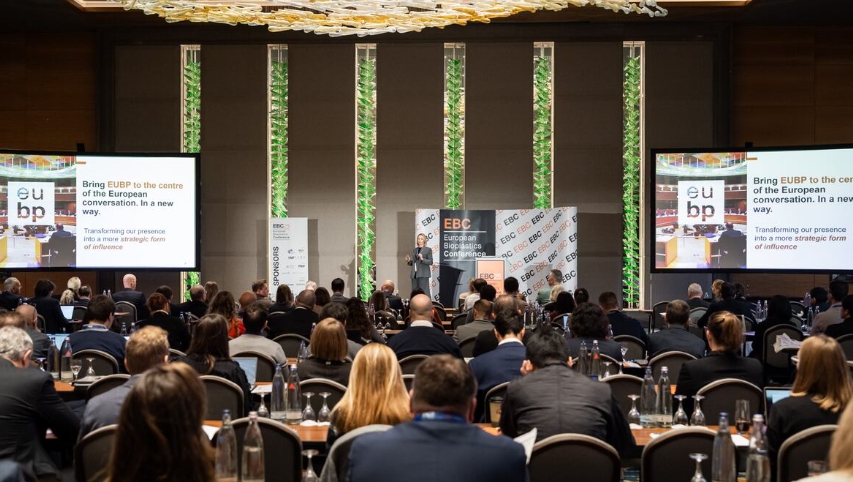
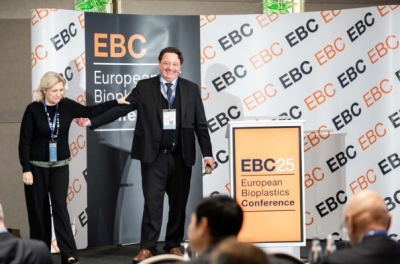
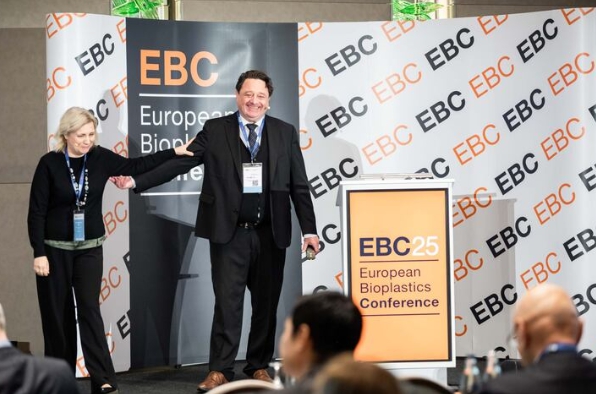
The 2025 edition of the European Bioplastics Conference opened with a sense of cautious optimism. Against a backdrop of fragile economic conditions and persistent pressure from conventional plastics, the sector gathered in the German capital to take stock of a year that delivered modest growth but ended with a major policy win. It was also an opportunity to mark two decades of the European Bioplastics Conference.
“It’s been a great year for bioplastics,” said Mariagiovonna Vetere, co-chair of European Bioplastics (EUBP), as she welcomed delegates on the opening morning. The note of confidence was underpinned by what she described as the most important political signal the sector has received to date: the European Commission’s newly published EU Bioeconomy Strategy.
“It ended with the best possible news,” Vetere added. “The strategy recognises the importance of biobased and compostable materials that we have worked so hard for.”
EU Bioeconomy Strategy
The EU Bioeconomy Strategy is part of a package of acts aimed at boosting European industrial competitiveness and reducing the continent’s reliance on fossil fuels. It places a heavy emphasis on scaling up the production and adoption of biobased materials, including bioplastics.
The strategy integrates bioplastics directly into the EU’s Packaging and Packaging Waste Regulation (PPWR). The Commission confirmed it will “support the recognition and uptake of biobased plastics and novel materials, in complementarity with recycled-content targets, ensuring a coherent approach across applications”.
It now plans to introduce criteria and targets for biobased plastics under the PPWR by 2027, one year earlier than the deadline initially set in the legislation. The PPWR says the Commission will conduct an impact analysis on the possibility of introducing biobased content targets within three years of the PPWR entering into force, ie 12 February 2028.
The strategy also includes provisions to assess whether EU-wide definitions could support certification and scaling of biobased polymers under the PPWR.
This regulatory push is intended to drive the adoption of biobased polymers not just in niche eco-products, but in high-volume sectors like food packaging and automotive parts, which the Commission highlighted as key growth areas.
A €10 billion market signal
Central to the Commission’s plan is the creation of a ‘Biobased Europe Alliance’, a voluntary coalition of major EU companies. This alliance aims to collectively commit to purchasing €10 billion worth of biobased solutions by 2030.
This move is designed to bridge the “valley of death” between pilot projects and industrial-scale production. By guaranteeing a market, the EU hopes to de-risk the substantial investments required to build large-scale biorefineries and biomanufacturing plants capable of producing competitive alternatives to conventional plastics.
Innovation fast-track
To ensure European companies can lead this shift, the strategy introduces the ‘Biotech Acts’. These measures aim to slash red tape, introducing ‘regulatory sandboxes’ for testing novel materials and fast-tracking authorisations for new biobased solutions. These acts are expected to be adopted during the third quarter of 2026.
“Scaling up biobased innovations requires a combination of public and private investments, as well as a streamlined regulatory environment,” the Commission said in its press release. The goal is to move research out of the labs and into factories, preventing European innovations from being commercialised abroad.
The EU bioeconomy is valued at €2.7 trillion and employs 17.1 million people, around 8% of EU jobs. However, the Commission argues that its potential remains largely untapped. By replacing fossil-based plastics with materials derived from sustainable biomass—such as algae, agricultural residues and forestry by-products—the EU aims to enhance its strategic autonomy and reduce exposure to volatile global fossil fuel markets.
Bioplastics market update
The EU’s recognition of the strategic importance of bioplastics could hardly come at a more critical moment. Following a policy-focused session centred on the PPWR and the new Bioeconomy Strategy, EUBP managing director Hasso von Pogrell delivered the organisation’s annual market update—numbers that suggest a sector quietly gathering momentum.
Global bioplastics production reached an estimated 1.67 million tonnes in 2025, up sharply from 1.28 million tonnes in 2024, according to provisional figures compiled by EUBP in collaboration with the nova institute. Installed production capacity also increased, rising to 2.31 million tonnes from 2.02 million tonnes a year earlier.
While bioplastics still account for just around 0.5% of the 431 million tonnes of plastics produced globally each year, the direction of travel is clear. Capacity utilisation reached 72% globally in 2025, a marked improvement on 58% in 2024. In Europe, average utilisation climbed to 73%, with some polymers—such as PET, PP, PEF and CR—already operating at or near full capacity.
Looking ahead, global installed capacity is forecast to grow to 4.69 million tonnes by 2030, based on what von Pogrell described as a deliberately more conservative outlook than in previous years. PLA remains the dominant material, accounting for 26.4% of capacity in 2025, followed by PA (18.9%), PTT (15.6%), PE (12.7%) and smaller but fast-growing shares for PHA and biobased PBAT.
more news Source
https://www.plasticsnews.com/suppliers/bioplastics/sp-bioplastics-turning-point-inside-at/