사이트맵 ×

토탈산업
현대보테코
리텍전시회

Market trends

엠쓰리파트너스
hnp인터프라
휴먼텍
한국마쓰이
기사제목
Two of the hottest topics in tooling today are additive manufacturing (3D printing) and conformal cooling—often with the former as a means to the latter.   By Matthew H. Naitove   Both subjects were on the agenda at last month’s Molding 2017 Conference in Charlotte, N.C., sponsored by Plastics Technology. The two-and-a-half-day event, devoted entirely to injection molding, drew a record crowd of 261, beating the previous year’s record attendance of 235.   A return appearance by Scott Kraemer, directing manager of new technology for custom molder PTI Engineered Plastics, Macomb, Mich., wowed the audience, as he did at Molding 2016, with examples of his firm’s imaginative exploration of the possibilities of tooling inserts laser sintered from metal powders.   One of his examples, which he invited the audience to inspect and touch, was a cavity block that incorporated not only conformal cooling but also rows of deep grooves in the back side that allowed for air cooling and saved both moldmaking material and build time.  Another of Kraemer’s experimental parts utilized two laser-sintering programs to build a single metal part with two different final densities. In this case, the central cavity portion was only 90% as dense as the surrounding block.  This allowed sufficient porosity in the cavity area to permit venting directly through the porous steel, without the need to relieve vent lands (similar to using Porcerax sintered mold steel). In fact, Kraemer hooked up a line to the cavity area to suck out air during molding and then to blow compressed air through the insert to clear out the pores after part ejection. (Learn more about Kraemer’s and PTI’s work on 3D-printed molds and conformal cooling here.)   For molders and moldmakers who want to avoid climbing the learning curve of additive manufacturing, a new alternative was presented at the conference by William Sames, CEO of HTS International Corp. His firm, formerly based in Austria, has set up new headquarters in Knoxville, Tenn. HTS is offering standard tooling components, branded iTherm, which incorporate conformal cooling and are made by a proprietary additive manufacturing technology used exclusively by HTS. This Innovative Metal Fusion Technology (iMFT) has been in development for over 10 years and has been used industrially since 2014. Sames would not reveal details, other than to say the process does not involve deposition of metal powders.   His firm is offering mold plates, tool inserts (near-net blanks for cavities or cores), and sprue bushings in a range of standard dimensions. All incorporate conformal cooling and are made with standard Uddeholm tool steels, such as Stavax and Mirrax. Sames cited three case studies. One was thin parts for an auto dashboard, molded in four cavities with a cold runner. The iTherm sprue bushing reduced cycle time from 36 to 31 sec, a 14% saving, in the first trial. A second case was cutlery molding in six cavities using four iTherm inserts and a sprue bushing. Trials reduced the cycle by 23% to 41%, from 6. 5 sec to a range of 3.8 to 5 sec. Third, the cycle time for a large pipe elbow was cut from 256 sec to 116 sec, a 55% savings.   HTS is currently working with Oak Ridge National Laboratory in Oak Ridge, Tenn., to expand the range of alloys available and the range of applications for iMFT technology.   http://www.ptonline.com/blog/post/record-crowd-at-molding-2017-hears-news-in-3d-printed-molds-conformal-cooling
Ms. Kang 2017-06-12
기사제목
▲ Rush LaSelle, Jabil Director Digital Manufacturing   This is a guest post in our series looking at the future of 3D Printing. To celebrate 5 years of reporting on the 3D printing industry, we’ve invited industry leaders and 3D printing experts to give us their perspective and predictions for the next 5 years and insight into trends in additive manufacturing.   Rush LaSelle is the Director of Digital Manufacturing at Jabil. Founded in 1966, Jabil are a global manufacturing services company operating in over 20 countries and with more than 175,000 employees.   3D Printing The Next Five Years by Rush LaSelle, Director, Digital ManufacturingAdditive manufacturing will transform industries over the next decade in a magnitude comparable to that of the Industrial Revolution. In the very way the previous revolution ushered in manufacturing processes and technology that made products (such as the automobile) affordable for the masses, additive manufacturing will make tailored products available to a larger percentage of consumers. As products become regionalized on the road to fully personalized, they will be produced in smaller lots, which will reduce dependencies on large-scale industrial operations. The benefit: Products then can be designed and delivered locally, which will drive greater intimacy between buyers and sellers.   Additive Manufacturing is a Critical ToolJabil’s history with additive is like most manufacturers: Its use has been limited to a few areas, including prototyping, and for specific applications, such as creating injection molds with conformal cooling. The company expanded its investment over the past few years as additive has presented cost models appropriate for a widening set of uses across the production spectrum. As technology improves and material prices drop, additive increasingly is being considered for production of final parts where small batch sizes challenge the investment in traditional production techniques, like injection molding. Plus, additive offers significant reductions in time-to-market for new products. The most competitive weapon in business is time, and additive is beginning to prove itself a critical tool in new-product-introduction, similar to how computing has accelerated back-office processes over the past two decades.   We believe several attributes are critical to accelerating the benefits of additive, and by way of extension, distributed manufacturing. First, a robust and secure digital thread to manage products efficiently from concept to end-of-life. Having a well-architected digital thread enables the democratization of design and the ability to distribute manufacturing to any location with digital manufacturing systems. Second, manufacturers will need to rethink traditional design and realization processes to align with accelerated product development efforts. Third, it is critical that additive technologies, like all new process equipment, go through rigorous readiness and qualification steps. Unlike prototyping, when additive is considered for manufacturing, thorough qualification of the machines, materials, processes, and ultimately the parts themselves, is required.  ▲ Jabil ensures the quality and consistency of an additive part using a CT scanner. Photo via Jabil.   The Decision to use Additive ManufacturingWith over 50 years of manufacturing and supply chain experience, Jabil has developed a network of systems enabling faster and more efficient management of product lifecycles and specific manufacturing processes. Connectivity across internal and external infrastructure is a critical aspect of driving distributed models that will power the proliferation of additive over the next five years. Only then can the network leverage vital resources–whether they are man or machine– permitting replication of tasks around the globe in predictable and repeatable manners.   As industry works to deploy appropriate processes and infrastructure, today’s choice of whether to use additive still comes down to comparisons with more traditional and lower-risk manufacturing technologies such as injection molding. Generally speaking, smaller parts tend to have higher breakeven points when compared to injection molding, while larger parts tend to have lower breakeven points. A review of a recent program for an electrical assembly enclosure saw component volumes range from 5,000 parts to 25,000 before it becomes more economical to invest in tooling for an injection mold vs. additive. We expect that over the next three years, both material and platform costs will decrease rapidly, which will increase breakeven points in these types of comparisons to well in excess of 100,000 parts. Until a more robust supply-chain is built around additive with the appropriate control systems in place, the decision whether to use additive will continue to revolve around comparisons with more well-known technologies such as injection molding and casting.  ▲ End-use parts produced by the HP MJF 3D Printing System awaiting clean-up. Photo via Jabil.   “We are hitting inflection points”From an industrial manufacturer’s perspective, the past 20 years of excitement around additive is on the verge of unlocking new manufacturing paradigms. Even today, the technology is only mature enough to impact a fraction of a percent of manufacturing operations. As companies work through the exacting process of qualifying machines, processes, materials and parts, the transformation will accelerate such that in five years it will represent a measurable impact on a $13 trillion market. With the continued release of platforms that offer step-function change, such as HP’s Multi Jet Fusion, there will be a business imperative for companies to have the digital, physical and process infrastructure in place to employ highly efficient conversion systems, such as additive, capable of supporting distributed manufacturing networks. We are hitting inflection points across technology platforms that suggest the next five years will see additive manufacturing more frequently rival traditional production solutions.  ▲ Jabil’s custom-designed industrial print rack for 3D printing tooling and fixtures. Photo via Jabil.   This is a guest post in our series looking at the future of 3D Printing, if you’d like to participate in this series then contact us for more information. For more insights into the 3D printing industry, sign up to our newsletter and follow our active social media channels.   https://3dprintingindustry.com/news/3d-printing-next-five-years-rush-laselle-jabil-director-digital-manufacturing-111773/  
Ms. Kang 2017-06-12
기사제목
Source: CPRJ Editorial Team   ▲ The Chinese WPC industry has experienced rapid growth in recent years. Advancing technology, market development, legislation support and improving standardization have driven forward the Chinese wood plastic composite (WPC) industry, which is about to enter a fast-growing period during the 13th Five-Year plan.   Most WPC composite uses polyethylene (PE) or polyvinyl chloride (PVC) as base materials. PE-based WPC has good aging resistance properties and is mainly used for outdoor decorating materials. PVC-based WPC is light and with good dimensional stability. However, its weather resistance is relatively poor and is largely used for indoor decorating materials.   The four driving force - technology, market, policy and standard   WPC consumption grew quickly in the 12th Five-Year Plan period due to the following reasons:  1. Product performance improved significantly along with rapid advancement in processing technologies, raw materials, molds, post-treatments, etc. WPC’s mechanical performance, weather resistance and aesthetics have moved to a whole new level.   2. Winning recognitions from the majority of consumers, especially in municipal gardening, real estate, tourist resort and household decoration, the market developed quickly and soon entered a fast growth period.   3. Chinese government support with a series of policies such as R&D support and tax subsidies.   4. Progress in product design and R&D, coupled with comprehensive industry standards, have pushed China’s WPC industry into elite level, with strong competitiveness in the global market.   China has now become the world’s largest WPC producer in the world. In the future, more efforts are required to improve product performance, such as creeping, thermal expansion, weather resistance and weight. Moreover, the development of accessories, such as equipment for product installation, is also needed.   Domestic consumption needs a boost   At present, major WPC manufacturers in China focus on exports, especially to Europe. One reason is that North America, having developed WPC at an early stage, is a matured market that is difficult to break into.   In recent years, Asia has shown the fastest growth, and China is one of the driving forces behind.   What the future holds?   The WPC industry is expected to continue its rapid growth during the 13th Five-Year Plan period. Products will become more matured and diversified. New innovations such as PE co-extruded overmolding, easy-to-install foamed PVC wall panels, etc, will lift the industry further. Chinese WPC products will gain a bigger share in the global market.   The recent developments of Chinese WPC industry were summarized below:   Market   Despite the economy slowed down, the WPC industry still experienced strong growth. According to statistics, domestic sales revenue rose by more than 20%.     As for exports, according to feedbacks from major domestic enterprises, overseas buyers and raw material suppliers, the global WPC market began its revival in the second half of 2015 from a relatively stagnant period two years ago.   The annual export growth rate of calendar year 2015-16 is projected at 30%. Export volume of PE-based products totaled approximately 400,000 tons.   For the calendar year 2016-2017, another 30% rise of export is predicted for the calendar year 2016-17.   Industry scale   With the addition of about 25 new players in 2016, there are roughly 200 manufacturers of PE-based WPC products in China. About five of them have an annual production volume of 20,000 tons, while 15 reach 10,000 tons. Total production volume of PE-based WPC exceeded one million tons.   From a geographical point of view, nearly 50% of WPC manufacturers are distributed around the Yangtze River Delta area. In recent years, developments have also accelerated in other areas, especially in the Southwestern and Northwestern China, where more and more WPC producers are established.   Product structure and new innovations   In the past year, product developments have speeded up, evidently demonstrated by the number of new products that were introduced in different exhibitions. Generally speaking, manufacturers have increased their efforts on R&D, which was rather inspiring for the industry.   For enhancement of product performance and appearance, overmolding process and inline embossing technology are widely adopted, leading to the birth of second generation PE-based WPC.   As leading manufacturers like NewTechWood, Sentai, Wallong, HonorWood and Huabang spending enormous effort in the development and marketing of second generation PE-based WPC, they will quickly become the mainstay in the market, replacing older, first-generation products.   Moreover, the Chinese products can now claim to be on par with leading players such as the US.   Development of foaming and co-extrusion technology will be the future trend in China’s PE-based WPC industry, for they are capable of reducing weight, enhancing weather resistance while reducing raw material costs.          ▲ Co-extruded WPC products are long-lasting and aesthetically pleasing.As for indoor application, easy-to-install PVC wall panels were launched in the market two years ago. Since they are inexpensive, easy to install, and aesthetically pleasing, these products are quickly accepted by the market, revolutionizing the indoor decoration industry.https://www.adsalecprj.com/Publicity/MarketNews/lang-eng/article-67026147/NewsArticle.aspx?keyword=China+WPC+industry
Ms. Kang 2017-05-22
기사제목
▲ The European project Samt Sudoe aims to boost the competitiveness of the plastics and molds industry in the Southwest Europe area (© Samt Sudoe)   The plastics and molds sectors of Southwest Europe are facing some common problems reducing its capacity to compete in a global market. The difficulty to be involved in R&D activities, problems to implement industrially innovations developed in universities or technology centres, obstacles to update the technology and develop the competences of the human resources, etc. are just some of them. The European project Samt Sudoe, funded by the Programme Interreg Sudoe through the European Regional Development Fund, aims to boost the competitiveness of the plastics and molds industry in the Southwest Europe area.   Samt Sudoe “Spread of Additive manufacturing (AM) and advanced materials Technologies for promoting industrial KET in plastic processors and mould industries within Sudoe space” encourages the application of additive manufacturing and advanced materials KET (Key Enabling Technologies) in the plastics and molds industry within the Southwest Europe area by creating nets and links between companies, R&D centers, higher education and public bodies. For that purpose, it will implement advanced production systems and new materials in the technological industries of these regions, present in a wide range of sectors, like the automotive, health, textile, footwear and consumer goods, among others.   This initiative is led by AIJU, The Toy Technology Centre. Together with the Centro Tecnológico da Indústria de Moldes, Ferramentas Especiais e Plásticos – CENTIMFE (Portugal) and the Institut de Chimie de la Matière Condensée de Bordeaux (Centre National de la Recherche Scientifique Délégation Aquitaine) - ICMCB CNRS (France), they will provide knowledge and expertise in additive manufacturing and advanced materials. On the other hand, the Clúster de Empresas Innovadoras del Valle del Juguete – CEIV (Spain) will provide the vision and knowledge of the sectors of the project sectors and the Instituto Valenciano de Competitividad Empresarial – IVACE, responsible for transferring this knowledge to all the productive sectors of the region.  http://www.kunststoffe.de/en/news/overview/artikel/european-project-formed-to-boost-competitiveness-of-the-plastics-industry-3477568.html?et_cid=5&et_lid=5  
Ms. Kang 2017-05-15
기사제목
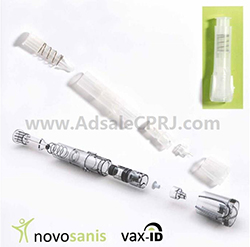
China Plastic & Rubber Journal (CPRJ) - Dec 2016 Issue  Source:China Plastic & Rubber Journal  By Victor Cheng   An aging global population leads tostronger demand for healthcare solutions that are both safe and easy to use.The industry is turning to the plastics industry that can help manage costswhile meeting the performance and safety requirements. ▲ The housing of the VAX-ID vaccination device is made of SABIC's PP.  By 2050, it is anticipated that approximately 2 billion of the world's population will be elderly (60 years and older), according to the World Health Organization (WHO), and 1 billion people will be waiting to be integrated into the healthcare system.In mature economies, disease prevention and self-medication in aging populations will drive the need for low-cost, easy-to-use devices. Meanwhile, developing economies will present great opportunities for medical device manufacturers – but equipment must combine high performance with affordability.Vaccination becomes more efficient For example, Novosanis, a Belgium-based device developer and producer active in the prevention, detection and treatment of infectious diseases and oncology, turned to SABIC when it created the VAX-ID vaccination device. SABIC’s PCGR40, a polypropylene (PP) resin, is used for the housing material for a short, thin, almost invisible needle that can be used to administer vaccinations that penetrate only 1mm under the skin, lessening the stress of receiving a shot. As explained, this ultra-clear material with enhanced flow provides an extra level of patient safety due to its transparency and is compliant with EU and US medical regulations. The easy-to-use device is dose-sparing, with only 10% of the dose needing to be injected compared to regular flu shots in the muscle, which means more people can be vaccinated using the same amount of antigen. It doesn’t matter what kind of polymers are used, the materials chosen for medical applications must be biocompatible, impact resistant, easy-to-clean, as well as resistant to chemicals, aesthetically pleasing, lightweight and sustainable."Unbreakable" alternativet to glass syringe Cyclic olefin copolymer (COC) is a relatively new class of polymers as compared to commodity plastics such as PP and polyethylene (PE). This newer material is an interesting plastic alternative to time-tested glass syringes due to the growing demands of novel agents on their primary packaging. Syringes made of this material are resistant to breaking, as transparent as glass and hardly interact with the packaged medications at all. Thanks to the use of injection molding, the design boasts especially tight tolerances. Its precise geometry also reduces dead volume, leaving behind less of the expensive medication in the syringe. Plastikos Inc, a custom injection molder, and its sister mold making company Micro Mold, both based in the US, have successfully commercialized disposable cartridge components made of COC for wearable drug delivery devices for medications such as insulin and pain medicines. The precision disposable cartridges, which consist of several parts molded of TOPAS COC from TOPAS Advanced Polymers, are manufactured under strict performance qualifications including highly challenging tolerance levels and multi-cavity tooling.“In these highly demanding applications, we are able to push the limits in terms of precision molding because of the broad material and process know-how we bring to the table,” said Rob Cooney, Manufacturing Manager for Plastikos.The project included the design and construction of multi-cavity molds that range up to 32 cavities with fully interchangeable inserts among all cavities. To further mitigate the risk of shipping a single defective part, every cavity on each mold was designed and built with a cavity pressure sensor. This mold sensor technology is used to monitor every cycle in production and provides 100% traceability. Plastikos worked with TOPAS Advanced Polymers to produce complex geometries and tight tolerances down to less than 0.025mm. “TOPAS COC fills a vital role in the disposable cartridge because of its repeatable performance in an industry where precision means everything. It’s a well-respected material because of its drug compatibility and other high-performance attributes,” said Dan Snyder, Technical Sales Manager for Plastikos. TOPAS COC provides purity, drug compatibility, biocompatibility, and dimensional stability. Unlike other engineering thermoplastics or glass, it offers a non-ionic, minimally reactive surface. This non-polar substrate does not promote adsorption, denaturation, aggregation, or precipitation.Gerresheimer uses COP for production of its new Gx RTF ClearJect syringe. In comparison to the similar material COC, cyclic olefin polymer (COP) features even greater tensile strength, fracture strain, flexural strength and impact resistance. Such material using a single type of monomer is chosen by German medical device producer Gerresheimer for its new Gx RTF ClearJect syringe. Since the entire syringe including the insert-molded cannula is produced in a single step, the product is free of tungsten and adhesives in addition to its metal ion-free nature. Medications for cancer therapy, for example, can be extremely aggressive to the point where the break resistance of a syringe is a decisive criterion for selection. Innovative biotech medications, on the other hand, are often effective in the smallest of doses and are frequently very expensive. Any interaction with the syringe material must be ruled out here. COP has a high pH tolerance and, unlike glass, does not change the pH value while in storage. The oxygen permeation rate is low in comparison to other plastics, and the values for extractables and leachables are low. The syringes are siliconized with a precisely controlled amount of high-viscosity, and thus low-particle, Dow Corning 360 MD (12,500 cSt) silicone oil to ensure optimum functioning. Precise dimensions and siliconizing ensure reliable syringe functioning with low breakaway and gliding forces and minimal force required to pull-off the needle shield. The syringes are suitable not just for packaging aggressive or toxic materials, but also for use in autoinjectors thanks to their ruggedness and precise geometry.Making life easy for elderly It is common for adults to consume nutritional supplements such as vitamins or minerals, often sold as effervescent tablets. These consumers are usually 60 years or older, the so-called elderly. However, it could be a difficult task to open conventional effervescent packaging as they lose their strength.Sanner’s new FOG 27 closure is easier to open than conventional effervescent packaging. According to the German Federal Association of Senior Citizens’ Organizations (BAGSO), more than 90% of senior citizens struggle with opening consumer packaging in general; three quarters criticize the handling properties of opening mechanisms in particular.“For producers of food supplements this is a decisive factor,” said Ursula Hahn, Product Manager at Sanner. “In case of bad experiences with the packaging, repurchase rates decline considerably.” To find a remedy, the German company has developed the new FOG 27 closure.A comparative study conducted by the market research institutes Quo Vadis and Packaging Intelligence surveyed 120 people in charge of their respective housholds, 60% women and 40% men, who purchase and consume vitamin, mineral or painkiller tablets two to three times per month. 87% of the participants confirmed the intuitive opening of the user-friendly FOG 27 closure. Apart from the easy removal of the warranty band, testers appreciated the painless, single-handed opening. They neither complained about pressure marks on their thumb, nor about aching fingers. As far as opening time is concerned, participants required approximately a third of the time to open the FOG 27: 9.2s instead of 25.8s for conventional closures. Moreover, the amount of physical effort needed for the first opening is significantly lower: 12 newton instead of 36 newton. Sanner's FOG 27 closures can be incorporated with its Brilliance Tubes, which are decorated using In-mold Labeling (IML) technology.A safer approach concerning desiccants Drop-in style desiccants, such as canisters and packets, are the most widely used method of controlling moisture in nutraceutical and pharmaceutical bottle packaging applications.Desccant canister with bright red labeling to avoid mistaking. Switzerland specialty chemicals company Clariant, through its Healthcare Packaging business unit, has introduced desiccant canisters with bright red labeling to better differentiate them from drug products. Displaying an easy-to-understand pictogram and the words “Do Not Eat” in multiple languages, they offer another layer of safety for consumers.“All desiccant canisters are marked with warnings to help avoid accidental ingestion,” explained Philippe Depois, Head of Sales, Clariant Healthcare Packaging. “However, depending on the color of the drug there may not be a sharp contrast. The distinctive and vibrant color of the red canister label can help patients more easily recognize the desiccant.”The new labels are made with materials compliant with EU and US Food & Drug Administration (FDA) regulations and include an outer varnish coating, so ink is not in direct contact with the drug. The canister labels can also be customized for specific color-differentiation or specific branding.https://www.adsalecprj.com/Publicity/ePub/lang-eng/article-67025087/asid-26/tc-en_CPRJ_EN_20170329/EbookArticle.aspx
Ms. Kang 2017-04-07
기사제목
Source: CPRJ Editorial Team    ▲ A new generation of linear low density polyethylene (LLDPE) packaging based on Addivant's nonylphenol-free stabilizer WESTON 705 has successfully hit the consumer shelves. A new generation of linear low density polyethylene (LLDPE) packaging based on Addivant's nonylphenol-free stabilizer WESTON 705 has successfully hit the consumer market."Due to its high phosphorous content, WESTON 705 reduces the use of antioxidants by up to 20%, allowing for more flexibility in formulations and recycling," said Dr. Jonathan Hill, Chief Technology Officer for Addivant. "Polyethylene (PE) resins based on WESTON 705 are easier to process, more versatile, and create less plateout or gels than resins based on conventional solid phosphite antioxidant."WESTON 705 has been approved globally by more than 20 major polymer manufacturers. It is, as the company said, the only liquid antioxidant for PE producers offering a broadly tested single-additive solution for global converters and packaging manufacturers.The growth of WESTON 705 in food packaging is being fueled by consumers and regulators increasing their focus on substances that unintentionally migrate from packaging into food, according to Addivant.Non-governmental organizations and authorities worldwide are pushing new food packaging regulations with a key focus on these Non-Intentionally Added Substances (NIAS). An example is the new Chinese food-contact law GB9685-2016 which, effective October 2017, will not allow greater than 10ppb of nonylphenol to migrate into food.WESTON 705 is the industry's only liquid phosphite antioxidant with a full, clean NIAS human safety assessment and is approved for food contact by more than 50 countries, including the US Food & Drug Administartion (FDA), the European Food Safety Authority (EFSA), and China’s National Health and Family Planning Commission (NHFPC).By the end of 2017, Addivant will have expanded its WESTON 705 capacity five-fold compared to early 2016 at its Morgantown, West Virginia, the US plant and in China."This is another important milestone for Addivant's more than $30 million investments in technology and capacity for WESTON 705," said John Steitz, Addivant's CEO. "We are establishing a new standard in our industry and it is crucial that we stay ahead of demand and provide full security of supply for our global customers."The company anticipates an additional expansion in 2018. https://www.adsalecprj.com/Publicity/MarketNews/lang-eng/article-67025993/tc-en_CPRJ_EN_20170329/NewsArticle.aspx
Ms. Kang 2017-04-07
기사제목
Persistence Market Research Pvt. Ltd  Metal injection molding (MIM) and ceramic injection molding (CIM) are advanced manufacturing technology used in manufacturing of complex, precision, net shape components from metal and ceramic powder respectively. Together these two technologies are popularly known as powder injection molding (PIM). Metal and ceramic injection molding technology offers the design flexibility for unlimited choice of material offered by powder metallurgy (powdered metal and ceramic). CIM(Ceramic Injection Molding), RauschertMIM(Metal Injection Molding), Tanfel MetalPIM(Powder Injection Molding), Wittmann BattenfeldMetal and ceramic injection molding provide better dimensional and productivity limits of isostatic pressing and slip casting. It improves lenience capacity of investment casting, further it improves mechanical strength, and the shape limitation of the products. The low cost, complex designing capabilities of MIM and CIS technology offers higher economy of scale and lessens the manufacturing time by eradicating production steps such as machining and finishing. There are mainly four steps involved in metal and ceramic injection molding market namely, feedstock preparation, injection modelling, debinding and sintering.Metal injection molding holds larger share as compared to ceramic injection molding. This is attributed to its increase use in automobiles and consumers market (such as watches and eyeglasses). The ceramic injection molding is widely used in manufacturing of medical and health care equipments. Metal injection molding leaves lower carbon foot print compare to some of the other injection technique such as ceramic casting and other injection molding techniques. Rapid industrialization, particularly the shifting of automobiles industries’ manufacturing in developing countries of Asia Pacific is driving the market of metal and ceramic injection molding market in this region. Further stringent regulation to reduce carbon footprint and enhance performance requirement is keeping the growth lucrative in Europe and North America. High threat from substitution from other molding techniques due to easy availability and user friendly, easy tooling, moderate working requirements and cost effective operation, has became one of the challenge for the industry in recent years. Asia Pacific is the largest market for metal and ceramic injection molding technology and still growing in double digit. Such high growth rate is attributed to increasing manufacturing industries in developing countries. Further with increasing gross domestic product (GDP) of the developing countries of Asia Pacific the overall market for advance modeling technology such as metal and ceramic injection molding is expected to grow in coming years. Europe is the second largest market for metal and ceramic injection molding owing to demand from automotive manufactures in Germany and Italy. Further increasing demand of consumer good is also propelling the overall market of metal and ceramic injection molding market. North America is the largest market of ceramic injection molding owing to high demand from health care industries. Request to view Table of content @ www.persistencemarketresearch.com/toc/3053The major companies operating in global metal and ceramic injection modeling market include AB Components, G-Mag International, Hong Ya Industrial, Datumag Inc., Abbot Furnace Company, Affinity International LLC., Cypress Industries, and Britt Manufacturing Co.http://www.openpr.com/news/378488/Metal-and-Ceramic-Injection-Molding-Market-Expecting-Worldwide-Growth-by-2020.html
Ms.Kang 2016-11-09